Contact: 07864 967555
Email: cosmoscounselling@gmail.com
Young Person and Adult Counsellor / Psychotherapist
Supervisor
Search Results
Search this site
268 results found with an empty search
- Should I Stay or Should I Go?
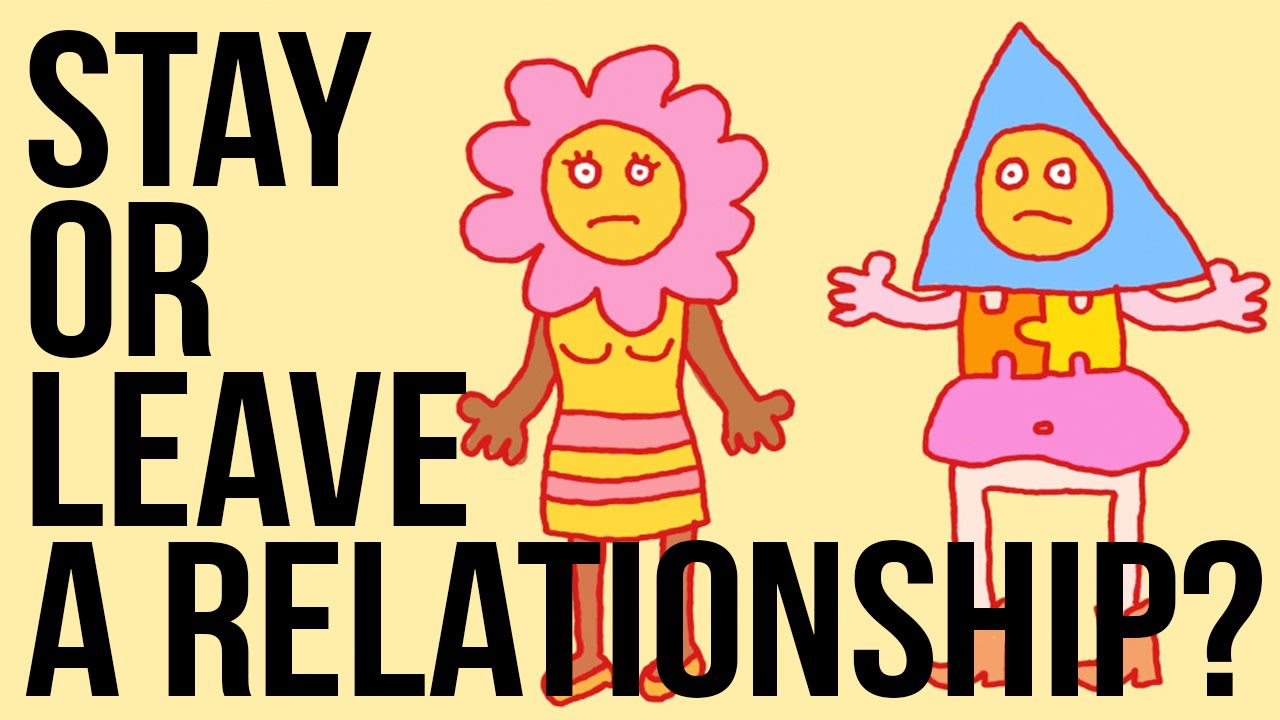
One of the most troubling situations we can experience is whether we should stay in a relationship or split. I am not talking about relationships that are destructive or where both of you want very different things but relationships that are generally pretty good but maybe not quite right. Where there are niggles. No one is perfect. Are you expecting too much? So, the wonderful School of Life has produced a short film: Should you stay or leave a relationship? Here is a checklist of questions to ask yourself before heading out too quickly - or too slowly. Is the grass really greener?
- Be Yourself
If you are in a relationship that is ok but not great and are considering leaving then these points may help: Make an inventory of your needs and prioritise them. Think of the four categories - physical, emotional, mental, and spiritual, and add financial, social, and more. This is very personal. To a feeling-type individual, sharing emotions is number one. If this is you, you may be feeling emotionally abandoned. Someone else may value intellectual conversation, while another person chooses shared interests, a travel companion, or financial stability. This is why no one can tell you what you should do. Consider which needs are your responsibility to yourself and not your partner’s obligation to fill for you. Are you blaming your partner for your own unhappiness? You are responsible for your own self-esteem. A survey showed that men are happy if their marriage is 50 percent okay, but women are disappointed if it isn’t 80 percent okay. One reason women expect more from their relationships may be because they look to their partner as a means of financial security or personal fulfilment. Men generally look to their careers to satisfy their need for fulfilment. More than men, women’s brains are wired to relate emotionally, and many women appear to lack the self-efficacy and motivation to succeed professionally. If you’re stressed because of work or depressed for some reason, the relationship will suffer. You may not feel like getting close or able to enjoy anything. Take responsibility for your mood. Counselling may help if you need more support and can’t get it from your partner. You can expect short-term support from them but not with a persistent, chronic problem or grief that continues beyond six months to a year. Your mood, not your partner, may be impacting the relationship. Pay attention to exactly how you feel around your partner. A key question is how you feel about yourself when you’re together. This is more important than how much they love you. Love and attention will always make you feel better, but they're not the best predictors of long-term happiness. Apparently, women tend to not trust their gut instincts. Instead, they rationalise staying in an unhappy relationship because the man loves her or is successful. When men are unhappy, they usually tune out their feelings and withdraw from the relationship emotionally, focussing their energy on work, hobbies, or an addiction. Both may seek sex or intimacy outside the marriage. Listen to how your body feels. You may not be able to define what’s wrong or “what’s missing.” It may be the feeling of connectedness achieved through greater emotional intimacy. That’s not the same as romance but is more honest and deeper. Take a risk: When you understand your needs and feelings better, plan a time when you and your partner can have a conversation. Speak honestly about what is missing for you. You can even say it’s serious and you’ve been thinking about breaking up, but that you don’t want to. You want your relationship to improve. Explain that you’re “unhappy because of ______.” Be specific about what behaviour they are doing and how it makes you feel. Don’t label your partner (e.g., mean, cold, self-centred), which puts the other person on the defensive, rather than engaging them in the conversation. State why the missing part is important for the benefit of the relationship. Describe how this behaviour or problem impacts your feelings. Don’t blame but share your feelings and let the other person know the effect that their behaviour has on you and your feelings toward them. Ask for what you want in the relationship. Specifically, describe the behaviours you’d like to see. Don’t just say what you don’t want. When you complain and say, “You didn’t (or worse, “never”) do X,” you sound like a victim, and the listener will feel criticised and tune out. It’s more powerful and effective to state what you do want. Make it concrete and visual. Don’t expect your partner to read your mind. Some women object and say, “If I have to tell him, it doesn’t mean anything.” Think again. Isn’t it wonderful that he cares enough to be willing to listen to you and make you happy? Then let your partner know that if they do what you’re asking how you will feel. This gives him or her incentive. Tell him how loving or happy, grateful, impressed you’ll be when they make the change you want. Reassure your partner that you know they can. Give examples of changes in the past or the way they treat others or accomplishes goals. You may not be able to describe what’s wrong. It may be a feeling of connectedness achieved through greater emotional intimacy. That’s not the same as romance, but more honest and deeper. It may take a skilled therapist to help you find it together. If you decide the relationship is worth trying to save, consider couples / relationship counselling, before walking away. One caveat: If your partner is highly defensive or has a personality disorder, such as narcissism (NPD) or borderline personality disorder (BPD), it will likely be more difficult to have this conversation. You can point out their reaction as a problem you would like to see changed. If domestic abuse is an issue, then seek outside support before considering taking this further at this moment. Thanks to Darlene Lancer for her advice.
- Why Create?
The potential space between the self and the outside world is the place for experiencing life creatively, whether it is a landscape, a theatrical or musical performance, a poem, or another individual and it is here that meaningful psychotherapy takes place. Winnicott writes: “I have tried to draw attention to the importance both in theory and in practice of a third area, that of play, which expands into creative living and into the whole cultural life of man… [this] intermediate area of experiencing is an area that exists as a resting-place for the individual engaged in the perpetual human task of keeping inner and outer reality separate yet interrelated… it can be looked upon as sacred to the individual in that it is here that the individual experiences creative living.” Winnicott insisted on the uniqueness of each individual and the right to, and importance of, discovering the world in a personal, creative way. This, of course, also applies to psychoanalysts and to psychoanalytic theory, and for that matter to any other field. In a paper given to the British Psycho-Analytical Society in 1948, he asks “… has due recognition been given to the need for everything to discovered afresh by every individual analyst?” So why not pick up your pen, pencils, paints or musical instrument and have a play. Just relax into it and allow yourself time to explore. No criticism or judgement. This is about enjoying the process, not focussing on the outcome. Ask yourself, how did this feel? Can I name the feelings? Did it take me to any past, present or future place? Any insights gained about yourself?
- Got a Problem? Write it Out!
As many of you know I am a huge fan of therapeutic writing. This last week I have written a modern fairy tale based on a personal experience. So, have you ever seen or experienced something? Wished you spoke up? Find yourself pondering life events? Writer Sakinah Hofler makes the case for writing as a tool to help you process difficult memories and reclaim the power they may hold. Pick up a pen or pull up a keyboard and follow along as she walks you through how to unburden your mind and inspire reflection.
- Finding Safety Within
Traumatic experiences are stored in the body. Rational thinking is not enough to deal with trauma so what are the best strategies for feeling safe, feeling calm, and feeling in control of your own body? How do you release trauma from your body and feel safe? Dr. Bessel Van Der Kolk is a Boston-based psychiatrist and The New York Times best-selling author of The Body Keeps the Score. He was previously the President of the International Society for Traumatic Stress Studies, Professor of Psychiatry at Boston University Medical School, and Medical Director of the Trauma Center. He has taught at universities around the world and his work has been featured in TIME, The New York Times, The Boston Globe, and more. What else about trauma? It makes you want to forget, it makes you want to push it away, it makes you want to erase it. Trauma is something that is so horrendous that you can’t cope with it, it’s too much to deal with Trauma renders you helpless and makes you feel like there is no way out Helplessness is an absolute precondition for a traumatic experience Our society continuously ignores how trauma is formed and created - pushing it under the rug and hiding from it Trauma is not a story - trauma is not a memory about the past. Trauma changes the brain. Trauma sits within you and within your body. People experiencing trauma keep behaving and reacting as if they were stuck in that experience When we are traumatised - the brain often cannot process it and the body “stores it” - the body gets stuck in a state of hyper alertness, the mind gets stuck in a state of hyper-alertness The perceptual situation in the brain becomes rewired to be on “high alert" Your body, your mind, your entire system gets frozen or stuck in “fight or flight” mode When you’re traumatised, it’s very hard to learn or integrate new experiences - thats what makes treating trauma so difficult Trauma is not typically rationally processed, it goes into the irrational part of the brain and your body gets locked into a place of constantly reacting as if you’re in a sense of danger Your body starts generating stress hormones at inappropriate times and you begin to feel out of control and helpless One of the most tragic results of trauma is people try to shut the feeling down and end up shutting down their ability to feel - or they turn to drugs, alcohol, and pharmaceuticals Studies show that yoga is more effective than any drug that has been studied for solving trauma There is promising research around psychotropics (psylocbin and MDMA) for trauma relief Neurofeedback is another promising solution for trauma "Playing computer games with your brain waves” to solve trauma Trying to remove delta or theta waves in the frontal lobe Self regulation - learning to control your own physiology using ancient Chinese and Indian methods - research is starting to show these solutions help as mind body interventions to solve trauma in the body Our mainstream western culture is “if you feel bad, take a drug” Practically what does it looks like to use something like yoga to regulate your own physiology? Chanting is also a very good mind body intervention - singing in unison with others One of the biggest struggles of trauma is that you feel isolated or lonely or by yourself Exposure treatment misunderstands how to treat real trauma It’s not the memory, it's that your brain/body - entire system - is locked in a state of being “high alert” - and that these mind body interventions are some of the best ways to help people feel “Safe” inside their own bodies How do you feel 'feeling safe, calm, and in control over y our own physiology'? What are the best strategies for feeling safe, feeling calm, and feeling in control of your own body? Trauma is a bodily experience of experiencing intolerable physical sensations - people can’t stand the way their bodies feel Breathing, moving, chanting, yoga, qigong, massage, dancing - these are all ways that you can make your body feel safe. Once your body feels safe, you can allow yourself to slowly go to the experiences from the past that caused the body to be put into a traumatic state Your body has to feel safe and be present to heal trauma Sitting still and meditating is often a challenge when you’re experiencing trauma None of this has to do with understanding or explaining why you’re experiencing trauma - understanding WHY your’e experiencing trauma doesn’t make you resolve it The rational brain has nothing to do with solving trauma in the body - it has to do with your “animal brain” This is NOT a rational problem - you can’t solve it rationally What are some of the best solutions? EMDR is another effective technique or strategy for processing trauma Somatic experiencing Sensory motor psychotherapy Traumatic sensitive yoga Sidran Foundation Trauma Research Foundation This work is 30 years old - people are just discovering the best treatments for trauma and it is a cutting edge field - many of the solutions don’t have a lot of evidence yet because its so new - it's all work in progress - it’s not definitive yet What is EMDR? A strange technique involving eye movement or sound that is revolutionary for solving trauma according to new research and brain scans. Does cardio help or hurt when trying to connect with the body? Not necessarily - it’s all about trying to make your mind and body connect more deeply.
- Talk or Medicate?
Six ways to heal trauma without medication, from the author of “The Body Keeps the Score,” Bessel van der Kolk. Conventional psychiatric practices often advise us that if we feel bad, take this drug and it will go away. However, after years of research with some of the top psychiatric practitioners in the world, it has been found that drugs simply don’t work that well for many, and our conventional ways of healing trauma need to change. More recently, researchers in the study of trauma have been experimenting with ‘new age’ healing mechanisms that are making massive waves for trauma patients. Some of these new healing methods include psychotherapy, EMDR, yoga, psychodrama and movement, the arts including creative writing and painting, neural feedback and even psychedelics. Many of these methods have proven to be more effective than conventional pharmaceuticals. Do note, what works for you might not work for your friend or neighbour. Always check your therapist is properly qualified and supported through supervision. Ask before you commit!
- Hotel Rwanda?
With the news that the UK government intend sending refugees to Rwanda, Brian Bilston's poem is a beautiful, sensitive piece of writing. It is a reverse technique poem meaning it can be looked at from two different perspectives just by changing the order in which the lines are read! What feelings are evoked for you as you read it through? Any words or phrases that particularly sit with you?
- Human Doing or Human Being?
This is such a busy time of year so how can we be less busy? Let the School of Life help you. What many of us long for more than anything else is a simpler life; we feel overwhelmed by our responsibilities, schedules, commitments and obligations. This is a film about how to create the simpler life we deserve.
- The Limbic Brain and Trauma
Traumatic events are common and most people will experience at least one during their lives. Trauma comes in many forms and affects thousands of people every day. Many people will recover with the help of family and friends and there are effective treatments for those needing extra support. This brief video from Dr Russ Harris, explains how our limbic system may respond to trauma and how it affects people particularly after the traumatic experience. Remember trauma is not so much the actual event but how the body responds to an event. Hence, we cannot compare traumas!
- So What Is Mindful Presence?
I am a big fan of TED Talks, finding them a useful resource to expand my knowledge. Here Wendy Quan leads us through a beautiful mindful meditation that creates a keen presence to fully experience the day’s events. Experience Wendy’s expert guidance. Wendy Quan, founder of The Calm Monkey, is the industry leader helping organizations implement self-sustaining mindfulness meditation programmes using change management techniques to create personal and organisational change resiliency. She trains and certifies meditators to become workplace and community facilitators through workshops and online training. Wendy is a certified organisational change manager who has been recognised as a pioneer by the Greater Good Science Centre at the University of California, Berkeley, the global Association of Change Management Professionals and the Chartered Professionals in Human Resources. Her worldwide clients include Google, the government of Dubai and amazing individuals who want to make a positive difference in the world. Wendy has a compelling personal story of how her cancer journey led to her life’s purpose: “ To help people create a better experience of life through mindfulness meditation ”. This talk was given at a TEDx event using the TED conference format but independently organised by a local community. If you enjoy this, I often recommend Insight Timer which has 1000s of meditations and visualisations to choose from. I like to bookmark my favourites. Jack Kornfield, Tara Brach and Mark Williams plus Clive Freeman, Rick Hanson and Franko Heke are all favourites.
- Feeling Safe Helps Us All
When we are polyvagal-informed, we start understanding not only the other person’s response but also our responsibility to smile and have inflection in our voice, to help the person we’re talking to help their body feel safe. When we feel safe, we can learn, we can connect with our feelings and respond to others.
- Trauma and Polyvagal Theory
Polyvagal theory in layperson’s terms. Polyvagal theory states there are three different branches of the autonomic nervous system that evolved from very primitive vertebrates to mammals. First, you have a system that is really an ancient one, which is death feigning or immobilisation. Then it has a fight or flight system, a mobilisation system. Then finally, with mammals, you have what Porges calls a social engagement system, which can detect features of safety and actually communicate them to another. When feelings of safety are triggered, the autonomic nervous system can help health restoration. In terms of dealing with a life threat, however, we are most likely go into this feigning death, dissociative state. Immobilisation is the critical point of the experience of life-threat trauma events. It used to be assumed by trauma therapists that stress was a fight-flight reaction but that’s not what the survivors of trauma describe. They were describing this inability to move, the numbness of the body and functionally disappearing and that’s what polyvagal theory described. When Porges started giving talks in the trauma world, the theory had tremendous importance because the survivors of trauma said: “This is what I experienced.” They had been confronted with a world that said: “That’s not what you experienced; why didn’t you fight?” Understanding how our bodies react during traumatic events has changed the therapeutic world. More emphasis on creating calm and safer environments, physical exercises and face to face work to help regulate and mirror emotions is supporting more people. All of us are going to experience some traumatic events. Isn't it better we are more informed to lessen the judgement and shame?