Contact: 07864 967555
Email: cosmoscounselling@gmail.com
Young Person and Adult Counsellor / Psychotherapist
Supervisor
Search Results
Search this site
268 results found with an empty search
- Think You Have Time?
"Your time is limited. So don't waste it living someone else's life" - Steve Jobs Many things can block or sabotage our success - more often than not, fear! So what can we do to help ourselves and live our own life?
- Be You!
Often attributed to Oscar Wilde but no real evidence, this is one of my favourite quotations. It reminds me that it is okay to be me. It's okay to walk my own path. If I am feeling unhappy most of the time or aware I am judging other people or not relaxed in other people's company then I may not be content with who I am. If I am frequently seeking the approval of others and not valuing myself then again, who am I trying to be? Am I adapting my behaviour to become more acceptable to others? All this negativity takes a lot of energy as we second guess and make assumptions. Isn't it easier to be ourselves? Are we not loveable as our true authentic self? If we struggle to like, let alone love, ourselves, can we really expect others to love and accept us? Winnicott posed that children thrive best with the 'good enough' parent who loves and accepts them unconditionally for who they are therefore we too can be loved and accepted as the unique person that we are.
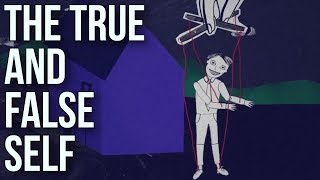
- True or False?
A good life is one in which we feel safe enough to show our 'true self' and do not mind too much occasionally having to wear the mask of a 'false self.' For this to be possible, however, we need a certain sort of childhood - as British psychoanalyst Donald Winnicott helped to explain in his theory of the true and the false self, outlined here. The false self is the "you" that you have projected into society, the "you" who interacts with the expectations you perceive others having of you. The false self has adapted in order to thrive. This encompasses the doubts, inhibitions and complacencies you have adopted to integrate into the society you want to be a part of. Most people would probably fall somewhere between their true self and a wholly adapted false self. You act how you want, within the boundaries that are necessary for you to be a part of society. The true self sets your self-identity and helps establish what you want from society, while the false self enables you to compromise and accept others in society even though their motives and morals may conflict with yours. FURTHER READING “One of the most surprising but powerful explanations for why we may, as adults, be in trouble mentally is that we were, in our earliest years, denied the opportunity to be fully ourselves, that is, we were not allowed to be wilful and difficult, we could not be as demanding, aggressive, intolerant, and unrestrictedly selfish as we needed to be. Because our caregivers were preoccupied or fragile, we had to be preternaturally attuned to their demands, sensing that we had to comply in order to be loved and tolerated; we had to be false before we had the chance to feel properly alive. And as a result, many years later, without quite understanding the process, we risk feeling unanchored, inwardly dead and somehow not entirely present…” You can read more on this and other subjects on The School of Life's blog.
- Managing OCD
Living with someone with OCD can be immensely stressful. Living with OCD can also be exhausting so what can you do? First step could be: 1. Get informed - find out a much as you can from a registered mental health professional such as a counsellor or psychotherapist, reputable websites and charities like OCD-UK. 2. Get help - consult your professional! 3. Get support - share with those you trust and will understand. 4. Get involved - understand how treatments work. 5. Be honest - talking to a third party can be helpful as they are not personally involved.
- Just Tidy or OCD?
Time and time again I hear people saying they have OCD because they have high standards of tidiness and order - lining up your tins in the kitchen, shoes neatly paired and facing the door in the hallway or bathing before bed so you are clean - yes, that's me! But it is not. It is a common misconception that if you like to meticulously organise your things, keep your hands clean, or plan out your weekend to the last detail, you might have OCD. In fact, OCD (Obsessive Compulsive Disorder) can be a serious condition that is frequently misunderstood by society and mental health professionals alike. It can, sadly, have a huge impact on someone's life including their family. Here Natascha M. Santos debunks the myths surrounding OCD. Lesson by Natascha M. Santos, animation by Zedem Media.
- Green Eyed Monster in Your Relationship?
Jealousy is not an attractive trait and can kill off a relationship instantly. Here, Matthew Hussey talks through jealousy and how to take back control. FACT: Your partner is attractive. (After all, whether it’s because of his looks, his personality, or both, YOU are attracted to him!) FACT: It’s inevitable that other women are going to find your partner attractive. So what do you do when you look across the room and catch another woman flirting with your man? You could view it as a threat, become jealous and needy, and even storm over to the two of them and cause a scene… OR you could do THIS, which puts you back in control and actually builds the kind of trust that lasts. Matthew gets lots of emails from women asking how to deal with this tricky situation, so I’ve chosen this month’s video to promote practical, actionable advice you can use right away…
- Struggling?
I came across these wonderful words from Mary Oliver this week. Maybe because life has recently thrown me a curve ball that I find myself sitting and reflecting on this time and time again. It is from her poem 'The Uses of Sorrow ': (In my sleep I dreamed this poem) Someone I loved once gave me a box full of darkness. It took me years to understand that this, too, was a gift. This was written after her partner of 40 years, photographer Molly Malone Cook, had died in 2005. It is from a book called Thirst: poems that were published the following year. Most of the poems are, in part, about dealing with that loss and the attempt to see spiritual meaning in it. Often the first line is left out but it is not prose. It is part of the poem. That line is meaningful. The title is important too. She is observing “the uses of sorrow”. We are meant to know this is about deep sorrow and dream images. The love they had together for so many years had a secret darkness within it. That someday it would end because we are all mortal. We are also meant to see the poems together as a whole. Not one part of it ripped away. From a talk and reading of her book a few years later in Seattle, Oliver recalled, " We were talkers - about our work, our pasts, our friends, our ideas ordinary and far-fetched. We would often wake before there was light in the sky and make coffee and let our minds rattle our tongues. We would end in exhaustion and elation. Not many nights or early mornings later, we would do the same. It was a 40-year conversation." What a wonderful gift. It makes me think about what is grief? Love that does not know where to go?
- The Power of the Pause
Take a pause now and then during the day to connect with yourself, to connect with your breath, to relax. Bring your stresses and tensions down as you breath - count 6 in, hold for 6, and 6 out...repeat...repeat. Check your thinking...check your body. Where are you? Be curious and accepting.
- Is your Partner like your Last?
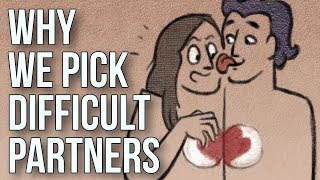
In theory, we're nowadays allowed to get together with pretty much anyone we like. And yet, at a psychological level, we aren't free to love just any suitable person. We have a type - and strangely and awkwardly, these types are often not those who stand a chance of making us maximally happy. Theoretically we are free to select the kind of person we love. We might have chosen someone else. We’re not being forced into this by social convention or match-making aunts or dynastic imperatives. But in reality our choice is probably a lot less free than we imagine. Some very real constraints around whom we can love and feel properly attracted to come from a place we might not think to look: our childhoods. Our psychological history strongly predisposes us to fall for only certain types of people. Freud was onto something...
- Why Trauma Needs Healing
I think many of us are familiar with PTSD and how body and behavioural responses can be triggered in everyday life to the extent that someone can find it difficult to build and maintain close relationships or work. Trauma is invariably behind other 'firefighting' behaviours such as addictions whether 'harmful' or 'healthy' - just think about over drinking versus working long hours! These are our coping strategies and for a lot of the time protect us from our thoughts and feelings...but they don't work all the time. Honour them and find support from a qualified and experienced trauma counsellor or psychotherapist. It may not be an easy or quick process but over time healing can begin.
- How Trauma Affects our Brain
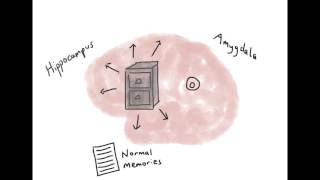
As I am doing EMDR training this month, I wanted to remind myself how trauma affects the brain. Looking through YouTube clips as well as reading and rereading previous training notes I came across this excellent clip which is why I wanted to share it. The London Trauma Specialists' Psychoeducation Video: The Brain Model of Post-Traumatic Stress Disorder (PTSD) is based on Brewin, Dalgleish & Joseph's (1996) Dual Representation Theory. It is clear, concise and accessible. If you feel you have experienced trauma, particularly childhood trauma and PTSD, I would recommend a counsellor or psychotherapist who is particularly trained or experienced in this area.
- Living Your Dash
This wonderful poem is by Linda Ellis and can be shared if non profit making. In the written form these dates show up side by side, start date and end date separated by a simple form of punctuation - the dash. This “dash” that separates these dates is what symbolizes the time between these two dates, in essence it is your life. How are you living your dash?