Contact: 07864 967555
Email: cosmoscounselling@gmail.com
Young Person and Adult Counsellor / Psychotherapist
Supervisor
Search Results
Search this site
268 results found with an empty search
- Very Sensitive? You Could Be a HSP!
Elena Herdieckerhoff is a mentor for highly sensitive and empathic entrepreneurs. She explains why we need to change the prevalent cultural narrative around highly sensitive people. She is the founder & CEO of Entreprincess. In this TEDx talk, she explains why we need to change the prevalent cultural narrative around highly sensitive people. As a Highly Sensitive Person (HSP) herself, she has made it her mission to empower other HSP entrepreneurs to turn their sensitivity into their greatest business asset. What is a HSP or Sensory-Processing Sensitivity (SPS)? Dr Elaine Aron has a lot of excellent information on her website https://hsperson.com/. It is not shyness which is a learnt behaviour. HSP is innate and normal - it is not a disorder. It is, however, much misunderstood and, in our western society, sensitivity is not particularly valued. With 15 to 20% of the population HSP, you are not alone.
- Quiet is Good!
We live in a culture where the dominant force is loudness: being seen, being loud, and making your voice heard. Even that phrase is strong; it's making your voice heard, not letting your voice be heard. It is everywhere - from news programmes, quizzes, radio shows to social media. Strength, however, doesn't have to shout out its existence. There are people who live quietly and they can be hugely influential. There are also different ways to approach situations that don't involve shouting down people to see your way, but instead, learning to listen before responding. Strength is about listening, speaking when necessary, empathy and congruence. We can only do that if we are present and aware of what is going on. I can often walk into a room, tell that someone is upset and respond. That's a gift. People tell me their life story because they feel safe. That's a gift. I do not fear conflict but there are different ways of handling it. That is a gift too. I have a voice and opinions but recognise when, how and where to speak that is right for me. Quiet can be strong.
- Staying Connected
Other things to consider: Use familiar or 'pet' names to build closeness. Pay genuine compliments or verbal affirmations - helps to repair ruptures. Make sure they are genuine - words of affirmation. Do a chore or task you know your partner would appreciate - acts of service. Send a text or message which shows you are thinking about them - words of affirmation. Don't forget the power in a hug, arm squeeze, etc - physical touch. Plan something new together - quality time. Affirm your partner's point of view - helps us to feel validated, empathised with and understood - words of affirmation. Actually look at each other when you talk together - hold the gaze to promote oxytocin, the love hormone! Treat them to a small gift which shows you are thinking about them e.g. their favourite chocolate bar - receiving gifts. Weekly 'check-in' on how you're doing - make it casual, relaxed, what went well, any small points to sort out? End on a positive to carry forward to the next week.
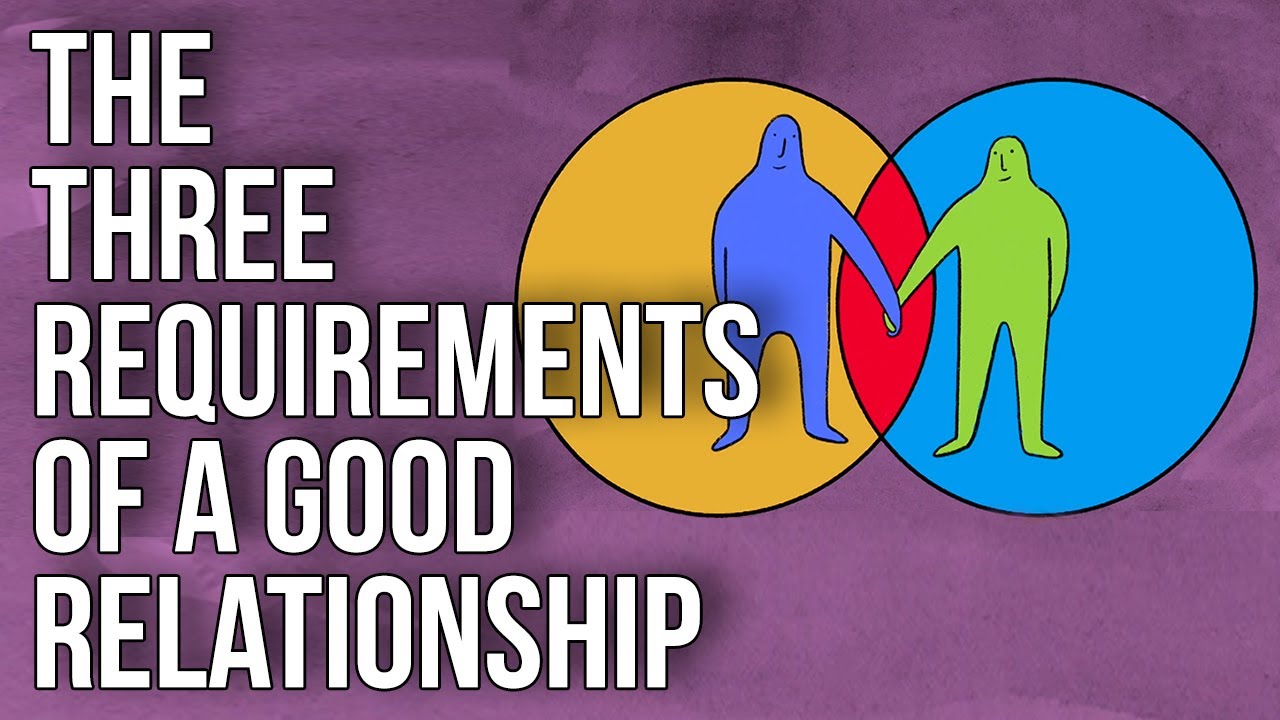
- What Good Relationships All Have
It can be hard to know what we really need from a relationship but the task becomes much easier if we keep in mind that every relationship requires just three crucial ingredients to work according to the School of Life. I would also like to add communication and empathy. All relationships take work and the ability to be flexible - reflective and reflexive can go a long way! The Disney version of relationships we are all sold as children is far from reality and impossible to maintain. Accepting that is a great start to understanding the complexity of a thriving relationship. PS that means we can be in relationship with many different people; the search for the 'soul mate' is not necessary!
- Grades Don't Measure...
A timely meme for August and a timely reminder that examination results are not everything and are not a reliable reflection of anyone's intelligence, let alone emotional maturity. If your results are not what you wanted, breathe, and maybe give yourself some time to think about the choices open to you. What is your gut telling you? Listening to your critical voice may not be very helpful. The inner critic will often demotivate, increase anxiety and reduce your self worth. Embrace your inner wise person. What are they saying?
- Young for Your Age?
Emotional immaturity can be very hard to spot - often residing in people who, from the outside, look more or less their age. Here, the wonderful School of Life offer us an indispensable guide to identifying the worst kinds of emotional immaturity, understanding where these come from and how we might handle them. Find out more on this and other subjects on the School of Life's blog, here: https://bit.ly/334m8zx The best thing about physical maturity is that it’s generally very easy to spot; we can so easily tell when someone has another decade of growth to go – and can therefore set our expectations, and our levels of forbearance accordingly. We have, however, no such luxury when it comes to emotional maturity. Here we can be constantly surprised by what we have on our hands. The most incredible forms of immaturity can coexist with all the trappings of adult life and a confident and knowledgeable manner. It can be a long time into a friendship, romantc or working relationship before we realise that we are unwittingly dealing with an emotional neophyte...
- Self-Care: More Than Bubble Bath!
I was reading a zine by Meg-John Barker about self-care which introduced me to the work of Audre Lorde, the black feminist writer and activist. Lorde argued "caring for myself is not self-indulgence, it is self-preservation and that is an act of political warfare." I often find myself talking about self-care and frequently face comments such as 'I need to do something, not take a bubble bath' or 'I have to focus on others first before me.' Self-care, however, is essential! As Barker points out, it means surviving in a world that may not want me to thrive, caring demonstrates I recognise my worth, it gives me energy which helps me to look after others and finally, it can help me pick my battles as I am calmer, stronger and, therefore, more resilient.
- Thrive or Just Survive?
Finding out a little more about the importance of self-care has been quite a journey of discovery. Meg-John Barker suggests the roots of self-care go back to various times and places with different understandings of it, such as black feminist ideas of compassionate resistance and buddhist practices of enhanced compassion, to dissolve the ego, leading to no self / other split. Barker also draws on ancient Greek practices of developing well=being and self-knowledge and Foucault's technologies to consciously construct ourselves. What does this all mean to us today? we need to meet our basic needs reducing self cruelty will help us kind self-care instead or critical just being; less doing time spent on reflection Like Barker, I very much believe self-care means different things for different people. There is no one-size-fits-all. I find myself saying 2 or 3 times a week, find out what works for you. There is no 'right' way. It may even vary according to the situation. Let's take meditation, for example. Meditation helps me to feel grounded and I can check -in on myself. Up to 10 minutes works well for me. Longer than that then I can struggle to be in the present. If I am agitated then allowing myself time to 'sit with' the agitation then meditate normally works. If it is still a struggle, I am kind and compassionate to myself, no criticism, permission to leave it then may reflect later in the day over what happened with curiosity and without judgement. Why not make a list of self-care activities that work for you? Do they meet the above 5 points? Barker suggests making a 'plan' such as: Daily - sitting with my cup of tea - basic needs - daily kindness - 3 good things about the day Weekly - journal - see friends at least 2 x Monthly - go to the sea - meet with support group Yearly - local college or online course - week away relaxing Remember - self-care does not have to involve a lot of money!
- Body and Soul
Someone once said, “It’s not what a quotation says to you that matters, but what you think it says.” Quotations are typically very brief and do not have much more than a dozen words, therefore a certain amount of interpretation MUST occur in the reader’s mind. This “soul/body” quotation is not found in any published writings by C.S. Lewis. Why it became associated with him appears unclear, but what is interesting is that people are clearly divided on its meaning. Are we souls in a body? Are mind and body linked? We know feelings are felt in the body and thoughts trigger feelings. The mind-body connection is the link between a person’s thoughts, attitudes and behaviours and their physical health. While scientists have long understood that our emotions can affect our bodies, we’re just now beginning to understand how emotions influence health and longevity. Now more than ever, we appreciate the importance of a holistic approach to care that includes mind, body, and spirit. How do you look after your body and soul?
- Remembering Our Ancestors
With Halloween at the end of the month, my thoughts went to the wonderful Mexican festival 'Dia de los Muertos' - a three-day celebration dedicated to remembering the lives of those who've passed and to support them on their spiritual journey; it's a time to celebrate life, not mourn the loss of it. Beneath our differences, we are all the same — or as famed Mexican printmaker and creator of the symbolic La Catrina, José Guadalupe Posada, once said, "Todos somos calaveras" — "we are all skeletons." Have you celebrated life today?
- What's Love?
Most of us think we know what love is and we may just be looking for the right person to lavish our love on and receive love in return but it's no insult, and indeed it might even be helpful to imagine, that we don't have much of a clue what love really is, not because we are deficient, but because our culture never investigates the subject as it should. We are told to love unconditionally but is that really true? Where are boundaries in all of this? How can I ensure love is healthy for both of us? Here is a list of seven ingredients that the School of Life suggests lie at the heart of a proper understanding of love.
- What is Love?
The truth is love doesn’t hurt. It isn’t supposed to hurt. A person who doesn’t know how to love, hurts others. Abuse, rejection, loneliness and losing someone hurts, but never love. Love takes away our pain. It feels good and you know when it’s right. Love is kind and love is compassionate. Letting someone know that they have hurt you may not be easy. Men can have a harder time with this, because they’ve been encouraged to not give into their feelings and may try to ignore idiotic comments. Sometimes, however, that just isn’t possible so before you challenge, check in with yourself and see if it’s worth the effort. If you do, you’ll want to mention what happened and how it made you feel before the offending party forgets it ever happened. Confronting someone who has hurt you can be a challenging for a lot of people. We become frightened that our intention to stop the hurt will be misunderstood and we will look like a fool. We may also fear that even a gentle confrontation may push our colleague away or turn a friend into an enemy. Hesitation is understandable, but something needs to be said, or the problem may continue. Saying to another “When you said **********, you hurt my feelings, please don’t do that again,” is absolutely fine. It’s just difficult to actually say it sometimes. Fear of being hurt further, or being embarrassed that you are feeling emotional, can keep you from protecting yourself. However, protecting yourself is necessary, especially if the problem persists. Ask the person if you could have a word in private. Keep it simple - a fact then how it left you feeling. You may not have to mention not to do it again. Remember we are not going down a blame route. After you have expressed your feelings, ideally what you need is for the other person to acknowledge what you’ve said and agree to respect your wishes. Once you’ve received that acknowledgment, then you have to wait and see what happens. Avoidance may seem like another strategy, but it rarely solves the problem. if it is a business or personal relationship with the person who has offended you, avoiding them will be difficult. Ending the relationship is always an option, but it may well be an overreaction and make any relationship even more challenging. Most people understand when they have crossed the line and are willing to pull back once they understand their transgression. If that doesn’t happen, you may need to be the one who withdraws, even partially, so you don’t have to deal with the negativity. Boundaries are essential. Healthy self esteem means calling out those who are disrespectful. Modelling how to be boundaried and respecting ourselves helps our young people develop their own self worth.